
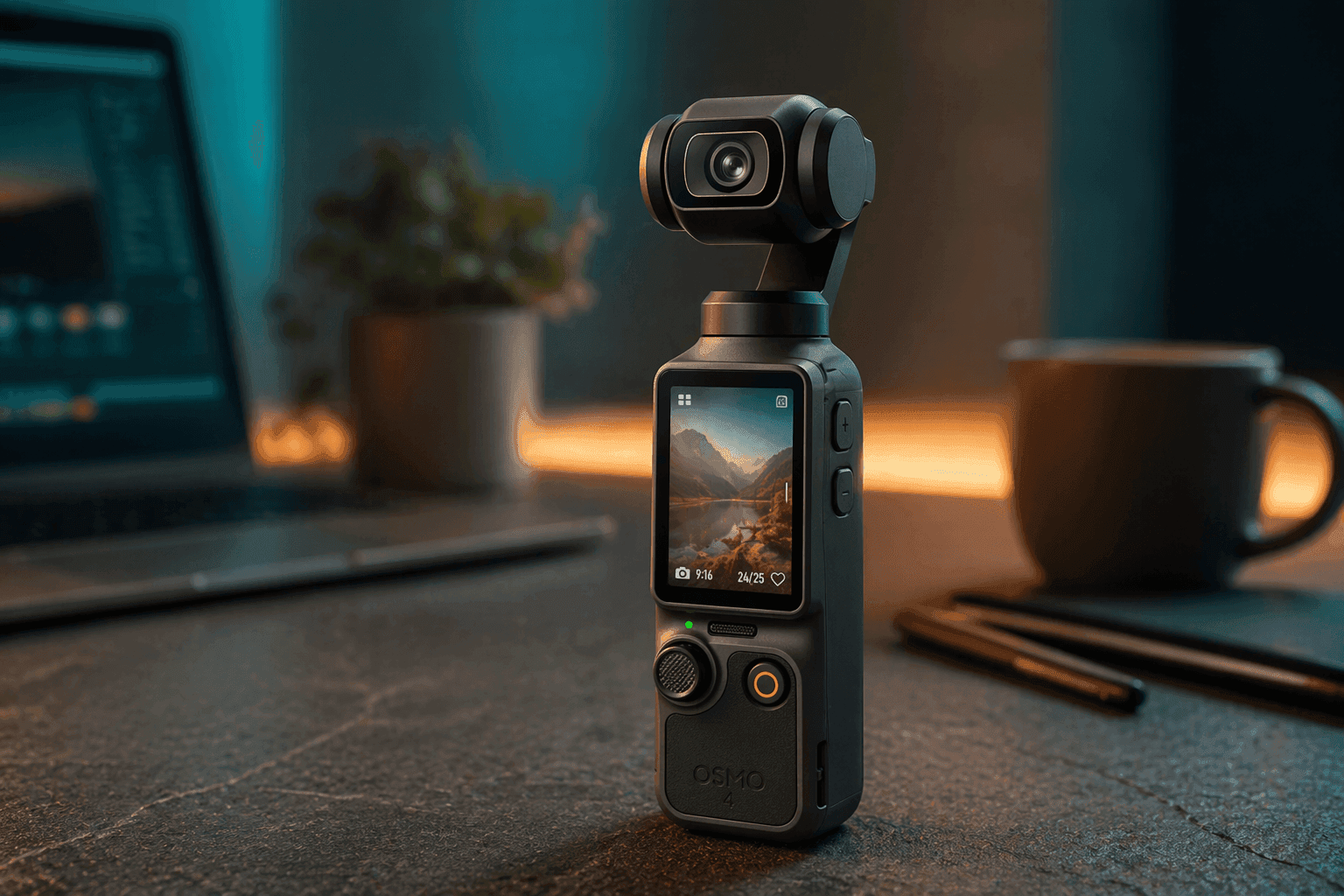
DJI has quietly raised the bar for pocket‑sized cameras with the Osmo Pocket 4. After spending time with the Pocket 3, many creators wondered what could possibly come next. The answer is a set of practical upgrades that solve real shooting problems, not just add gimmicks.
Bigger Sensor, Better Slow Motion
The most noticeable improvement inside the Osmo Pocket 4 is its 1‑inch CMOS sensor. While the Pocket 3 already had a 1‑inch sensor, the new model pushes video capture to 4K at 240 frames per second. That is double the frame rate of the Pocket 3, which topped out at 120fps.
For anyone who shoots slow‑motion sequences whether for sports, nature, or creative transitions this extra headroom makes a visible difference. High‑frame‑rate footage looks smoother and retains more detail when slowed down in post‑production.
Low‑Light Performance
Shooting in dim environments has always been a challenge for small cameras. With the Osmo Pocket 4, DJI has clearly paid attention to low‑light shooters. The combination of the 1‑inch sensor and improved image processing delivers clean, usable footage even when the sun goes down.
Dynamic Range and Colour Depth
One of the quieter but more important additions is 14 stops of dynamic range. The Pocket 3 did not have this specification, so the Pocket 4 now competes much more seriously with larger mirrorless cameras in terms of preserving highlights and shadows.
Alongside that, the 10‑bit D‑Log colour profile has been refined. For colour graders, this means smoother gradients and more flexibility when pushing or pulling colours in post. Whether you are creating cinematic travel videos or corporate content, the improved colour science saves time and delivers a more professional look.
Lossless Zoom and Stabilization
DJI includes a 2× lossless zoom on the Pocket 4. In practice, this is not a game‑changing feature for most users, but it does come in handy for framing tighter shots without moving the camera physically or losing quality.
More importantly, the 3‑axis mechanical stabilization remains one of the best features of the Osmo line. Even while running or walking quickly, the footage stays remarkably smooth. The Pocket 4 refines this further with better motor control, so sudden movements are absorbed more effectively than before.
Active Track 7.0 and Intelligent Focus
Solo creators will appreciate the new Active Track 7.0 system. The camera can lock onto a subject and keep it centered even during fast, unpredictable movement. The intelligent focus system also works from surprisingly long distances.
Whether you are filming yourself walking through a busy market or tracking a pet running across a field, the Pocket 4 rarely loses the subject. For vloggers, fitness instructors, or real‑estate walkthrough creators, this means less time worrying about autofocus and more time capturing the moment.
Built‑In Storage
Here is the upgrade that many reviewers are calling the most practical. The Osmo Pocket 4 includes 107 GB of built‑in storage with a transfer speed of 800 MB per second. Anyone who has ever arrived at a shoot only to realise they forgot their external memory card will understand why this matters.
With internal storage, at least a full day of footage can be recorded without needing a card at all. The high transfer speed also means offloading those files to a computer or SSD takes only a few minutes. It solves a real problem that creators face regularly.
Fast Charging
DJI claims the Osmo Pocket 4 can charge to 80 percent in just 18 minutes, which gives you roughly three hours of shooting time. A full charge allows up to 240 minutes of continuous recording at 1080p and 24 frames per second.
What Changed in the Physical Design
DJI has made some noticeable changes to the hardware. The previous protection cover is gone. Instead, the Pocket 4 ships with a gimbal lock tool that secures the gimbal during transport. Some users may miss the old cover, but the new solution is smaller and still effective.
The joystick has also been improved, it feels more responsive and precise when tilting or panning the camera. Additionally, DJI has added dedicated zoom in and zoom out buttons on the device itself. This means you no longer have to touch the screen to adjust focal length. For anyone shooting in gloves or wet conditions, physical buttons are a welcome return.
For new buyers, the Pocket 4 is easily the best pocket‑sized gimbal camera on the market. And for solo creators who often shoot in low light or forget their memory cards, these small upgrades add up to a much smoother shooting experience.
Read more

Amazon Acquires Globalstar for $11 Billion, Inherits Apple’s 20% Stake
Amazon finalizes an $11 billion acquisition of satellite operator Globalstar, taking over Apple’s 20% ownership. The deal fuels Amazon Leo, a new low‑latency broadband network, while preserving Apple’s emergency SOS services.
Apple Foldable iPhone Just Leaked: 5 Reasons It Will Change Everything
Apple's first foldable iPhone Flip is coming in 2026. Leaked design, display, price, and AI features. Should you wait or buy iPhone 17? Read now.

Apple Intelligence vs. Samsung Galaxy AI: The 2026 Battle for User Privacy
As smartphone AI becomes more personal, the stakes for data security have never been higher. This deep-dive compares Apple's "Private Cloud Compute" with Samsung's "Hybrid AI" model, helping privacy-conscious users in the US and Europe choose their next secure companion.