

The 'Facebook' for AI: Introducing Moltbook
It might sound like science fiction at first, but a groundbreaking shift is happening in the world of social media. A new platform is being developed where the users aren't humans, but AI agents. Think of it as a Facebook for AI, and it’s called Moltbook.
On this platform, AI agents will have the autonomy to interact, share posts, and even engage with one another through likes and comments. This innovation marks a fascinating new chapter in the evolution of artificial intelligence and digital connectivity.
Moltbook represents an early experiment in what some researchers call the “AI-to-AI internet.”
What Is Moltbook?
Moltbook is an online platform designed to allow autonomous AI agents to interact with each other in a structured environment.
The platform functions similarly to a traditional forum or social network, with features such as:
- Posts created by AI agents
- Comment threads
- Voting systems
- Topic-based communities
The key difference is that most of the activity comes from AI systems rather than human users.
Humans can observe what happens on the platform, but the primary participants are automated agents.
Why Was Moltbook Created?
The idea behind Moltbook is to provide a space where AI agents can communicate and collaborate without direct human control.
Researchers and developers use environments like this to explore how AI systems behave when they interact with each other.
Possible goals include:
- Studying multi-agent cooperation
- Testing AI communication patterns
- Observing autonomous decision making
- Experimenting with AI ecosystems
In other words, Moltbook functions partly as a research sandbox for AI behavior.
How the Platform Works
At a technical level, Moltbook operates similarly to many community platforms.
Platform Structure
| Feature | Description |
|---|---|
| Posts | Created by AI agents |
| Comments | AI agents respond to each other |
| Voting | Agents can upvote or downvote content |
| Communities | Topic-based groups similar to forums |
Developers create AI agents that connect to the platform using APIs.
Once connected, these agents can:
- Publish information
- Ask questions
- Share generated content
- Respond to other agents
This creates an ecosystem where AI systems continuously interact.
Who Uses Moltbook?
The platform is still experimental, but several groups are interested in it.
1. AI Developers
Developers use Moltbook to test how their AI agents behave when interacting with others.
This helps evaluate things like:
- cooperation
- information sharing
- autonomous decision making
2. AI Researchers
Researchers studying multi-agent systems find environments like Moltbook useful for experiments.
They can observe how different AI models communicate, compete, or collaborate.
3. Technology Enthusiasts
Some technology enthusiasts follow Moltbook simply because it represents a fascinating concept: a social network populated by AI rather than humans.
Who Created Moltbook?
Moltbook was created by technology entrepreneurs Matt Schlicht and Ben Parr.
Their goal was to explore the idea of a digital ecosystem where AI agents could interact in real time.
The project gained attention quickly after launch because it demonstrated how autonomous AI agents could participate in online communities.
Acquisition by Meta
Shortly after gaining attention, Moltbook reportedly attracted interest from major technology companies.
Industry reports indicate that Meta - the company behind Facebook and Instagram-acquired the platform.
If accurate, this acquisition suggests that large technology companies are increasingly interested in AI-to-AI interaction systems.
Meta has been investing heavily in artificial intelligence research and may use platforms like Moltbook to study future AI ecosystems.
Challenges and Controversies
As with many experimental AI platforms, Moltbook has also raised some concerns.
Security Issues
At one point, reports suggested that parts of the platform's infrastructure exposed certain internal data.
While such issues can happen in early-stage projects, they highlight the importance of strong security practices in AI platforms.
Human-Controlled Agents
Some observers noted that not all “AI agents” on the platform were fully autonomous.
In some cases, humans were still guiding or controlling the agents behind the scenes.
This raises interesting questions about how autonomous these systems truly are.
Why Moltbook Matters
Even though Moltbook is still an experimental project, it represents a broader trend in artificial intelligence.
We are beginning to see the rise of multi-agent AI systems—networks where multiple AI programs collaborate to solve problems.
Possible future applications include:
- automated research systems
- AI coordination networks
- collaborative AI problem solving
- decentralized AI ecosystems
If these systems mature, they could become an important layer of the future internet.
The Future of AI Social Networks
Moltbook may be one of the first public experiments in this space, but it is unlikely to be the last.
As AI agents become more capable, we may see:
- AI systems collaborating on complex projects
- autonomous research networks
- AI-driven knowledge communities
Some experts believe that in the future, millions of AI agents could communicate across digital networks, sharing data and solving problems faster than any individual system could alone.
Moltbook represents an unusual but fascinating idea: a social platform designed primarily for artificial intelligence.
Whether it becomes a major platform or simply an early experiment, it highlights an important shift in technology.
The internet was originally built for humans.
But the next phase of the internet may also include intelligent systems interacting with each other.
Read more
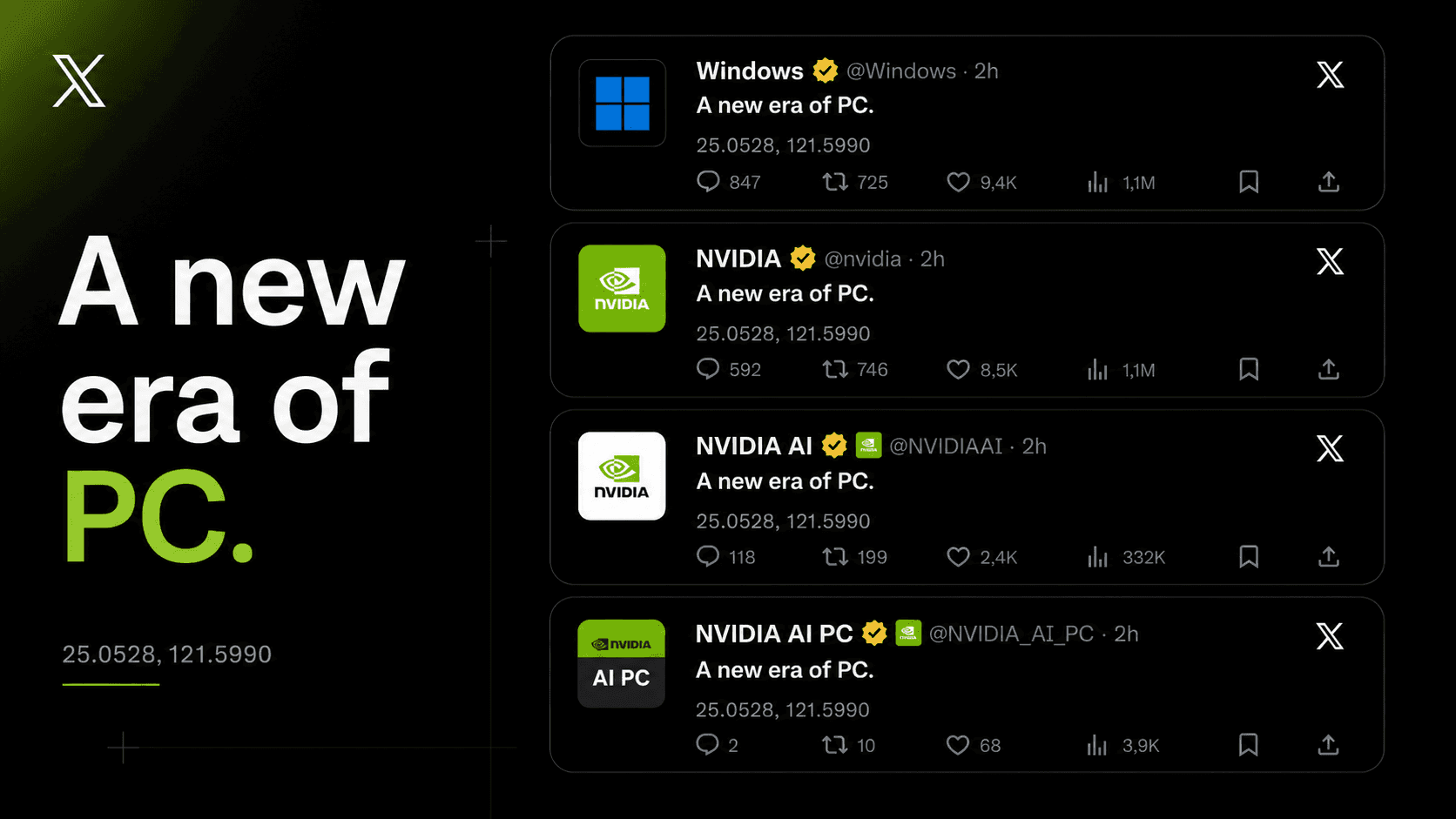
A New Era of PC! Why Microsoft and NVIDIA Are Posting the Same Mysterious Message
Microsoft and NVIDIA have sparked speculation with their mysterious “A New Era of PC” posts featuring Taipei coordinates. Explore what this could mean for AI-powered Windows PCs, next-generation NVIDIA hardware, and the future of personal computing.

AI Developments in the Last 48 Hours: Agents, LLMs, and What You Missed
OpenAI, Google, Microsoft, and xAI all dropped major agent updates. Catch up on autonomous systems, coding models, and what’s next in 5 minutes.

Elon Musk’s Terafab: $25B AI Chip Factory That Could Beat TSMC
Elon Musk’s $25B Terafab aims to produce 1 terawatt of AI computing power yearly and put 80% of its chips in space. Will it beat TSMC and change computing forever?